Tenis de Silla / Chair Tennis
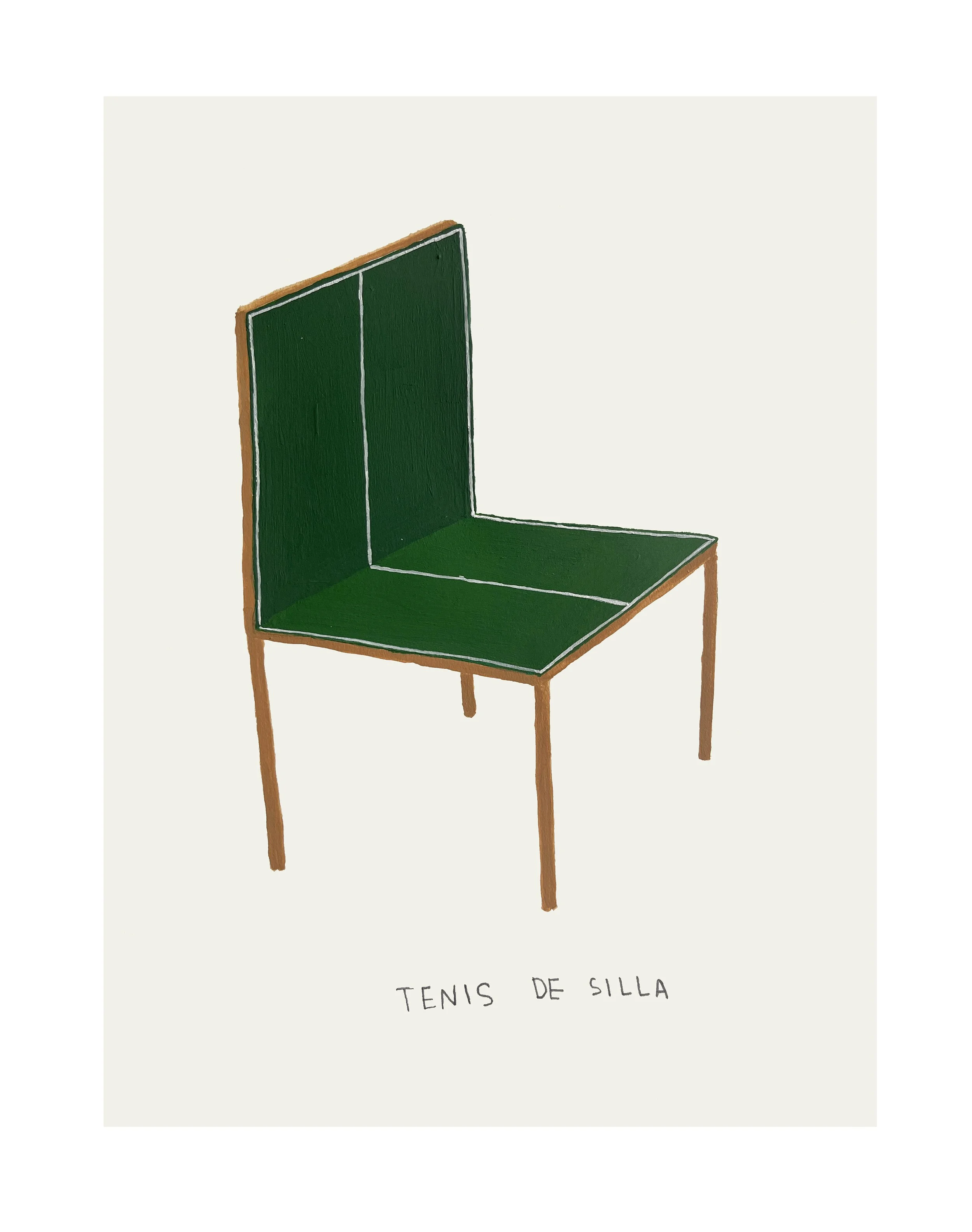
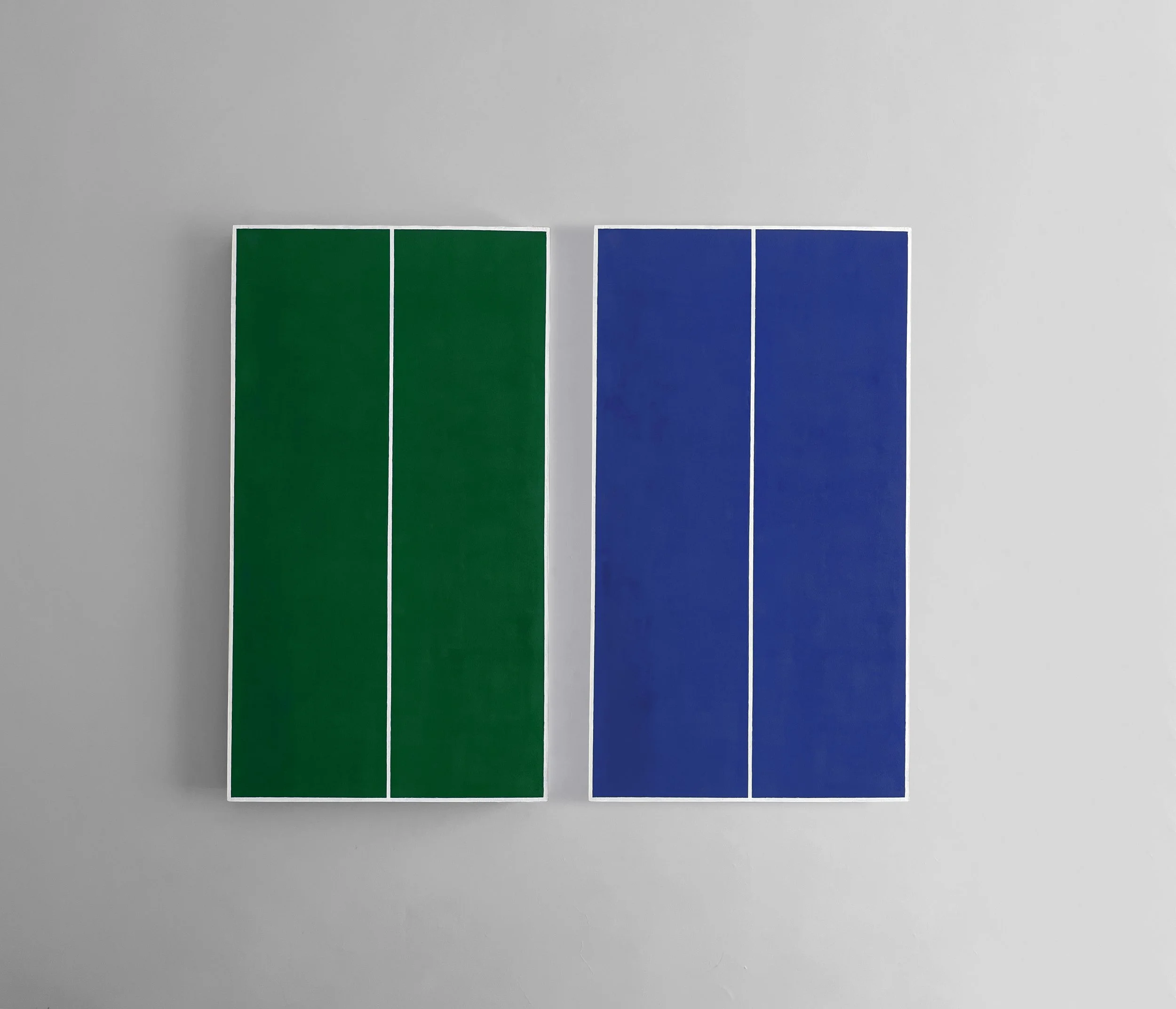
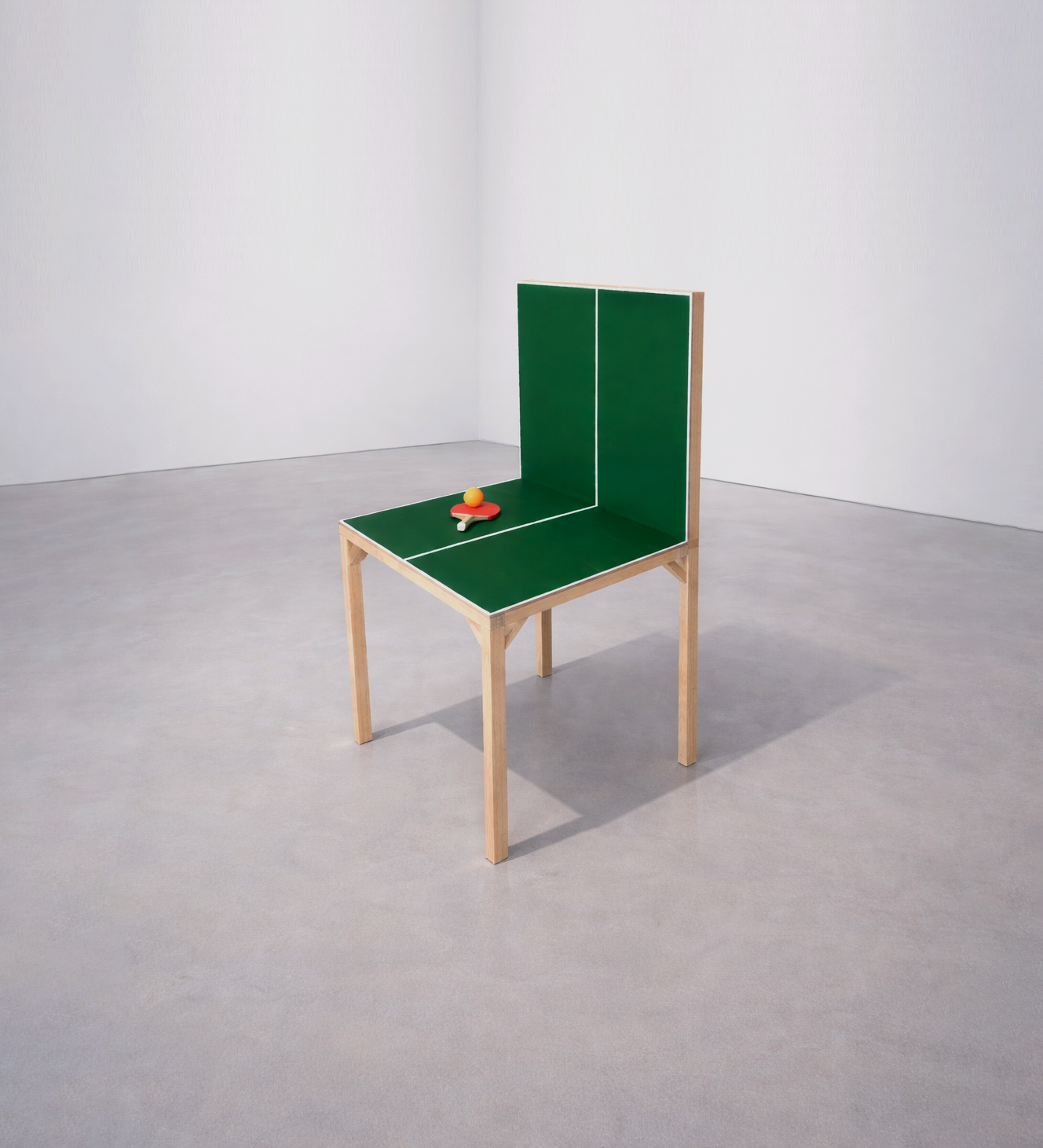
La pieza parte de un desliz mínimo del lenguaje y lo toma con absoluta seriedad. “Tenis de silla” describe un pequeño error productivo: una torsión semántica que desplaza el sentido de algo conocido hasta volverlo extraño. Allí ocurre la operación central del trabajo: el objeto cotidiano deja de obedecer su función estable y entra en un territorio especulativo donde el uso es solo una hipótesis.
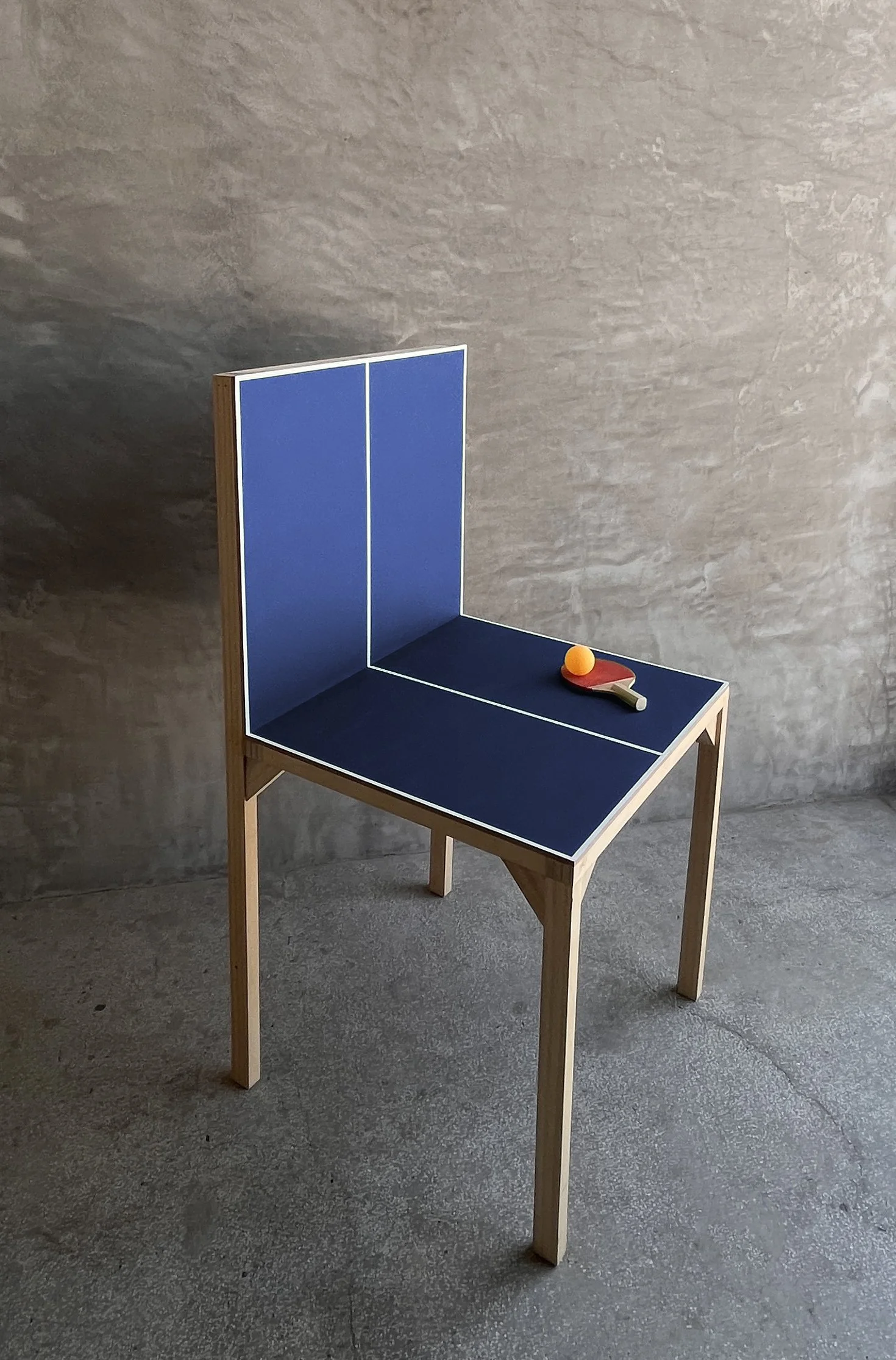
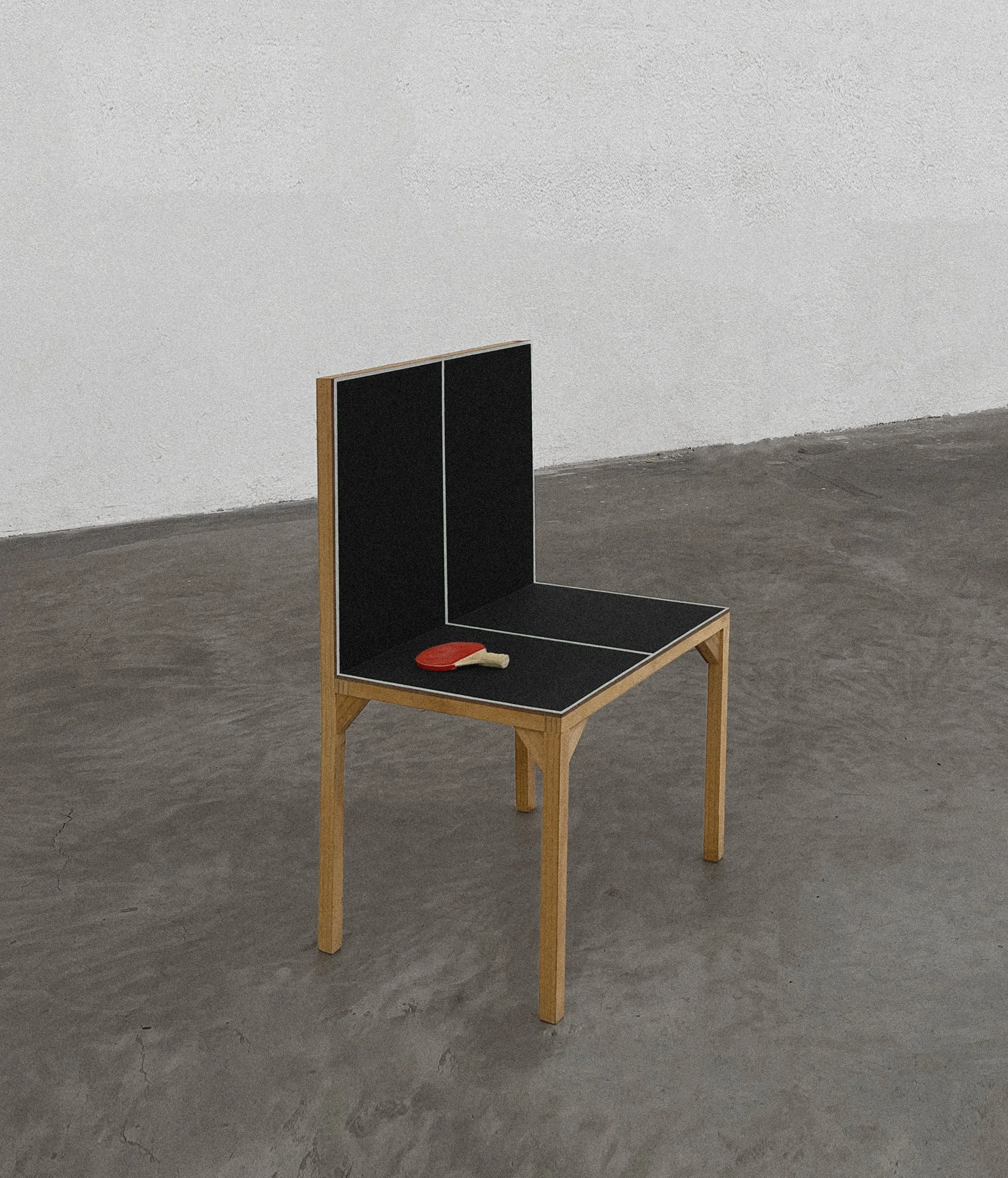
La silla, históricamente asociada al reposo, a la espera y al cuerpo en posición pasiva, es empujada aquí hacia el campo de la acción y el juego. Introduce una ficción funcional que reorganiza la percepción. Si existe el tenis de mesa, práctica que ya implicó reducir la escala del deporte y domesticarlo en el interior, “tenis de silla”.
Me gusta que la mutación sea lingüística pero también material, y por eso es más inestable. El dibujo mantiene la austeridad formal, casi didáctica, como si se tratara de un diagrama de diseño. Sin embargo, ese aparente orden está sostenido por un error fértil. El lenguaje opera como herramienta escultórica invisible: modela la función y desarma la tipología para finalmente proponer un objeto que existe sobre todo como posibilidad mental.
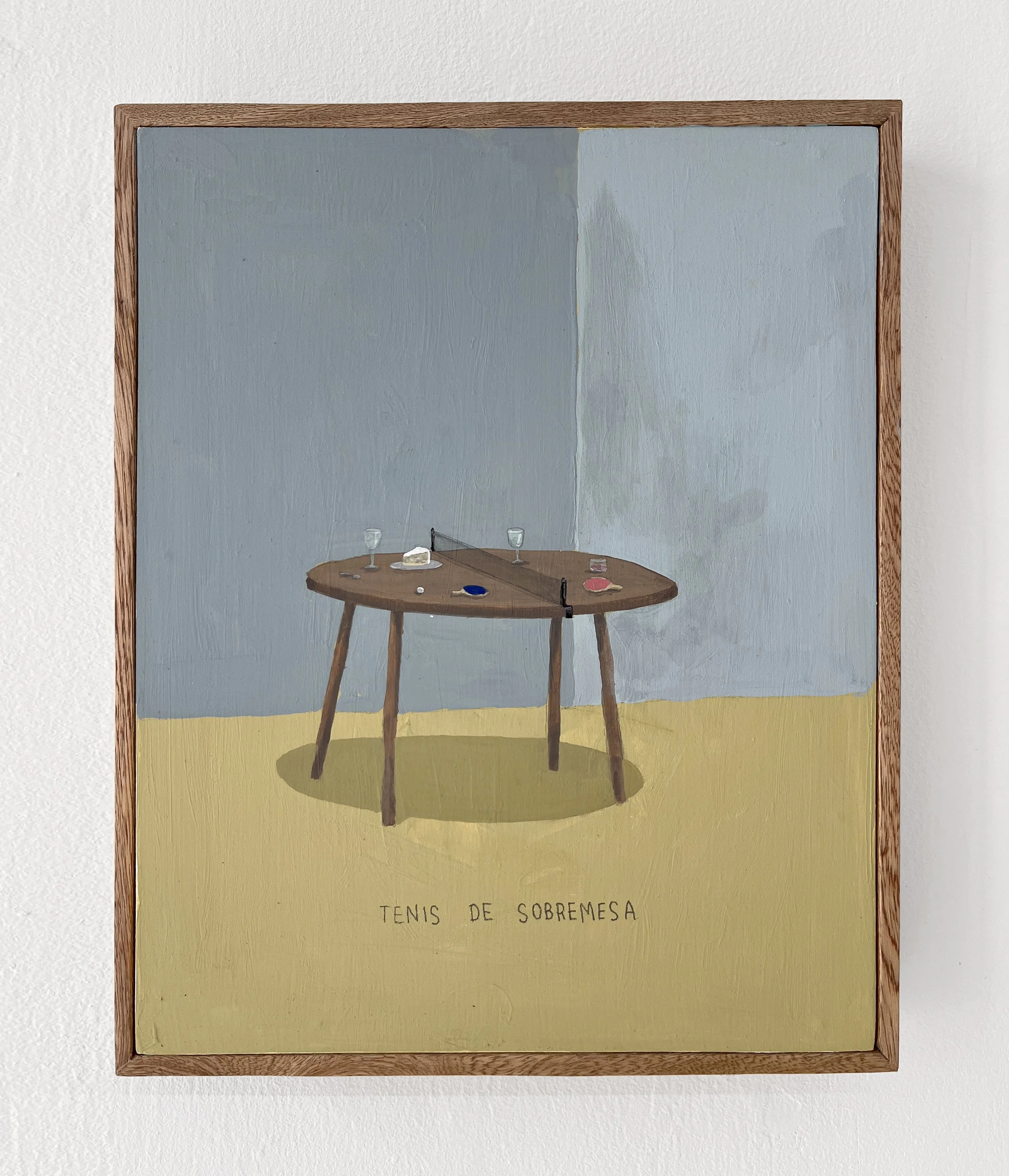
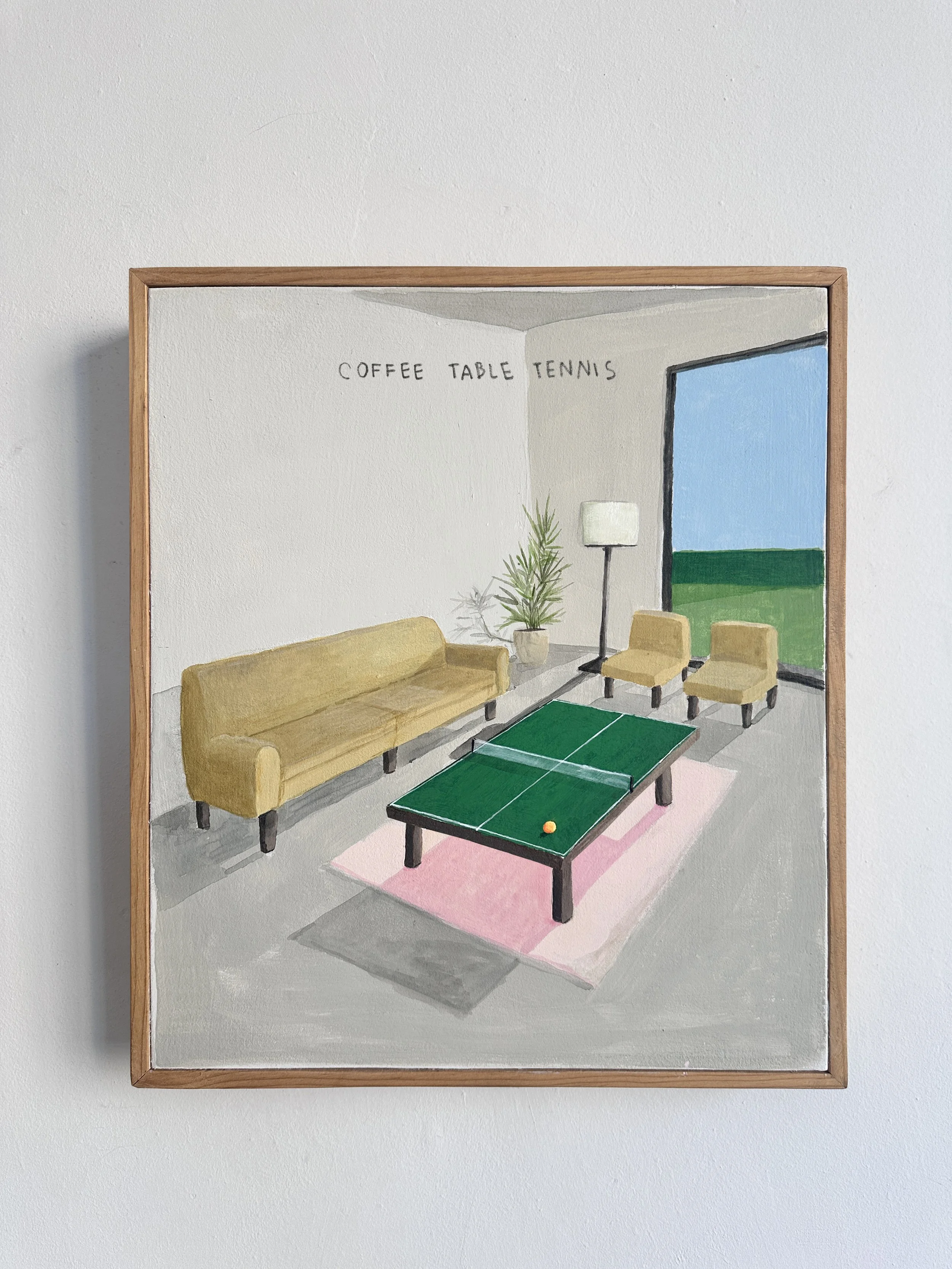
“Tenis de sobremesa”, “coffee table tennis”, “tenis de silla” funcionan como variaciones de un mismo gesto: evidenciar que los objetos no están cerrados en su destino, sino que dependen de acuerdos culturales. Cambiar una palabra altera la coreografía del cuerpo, la escala del espacio y la imaginación de lo que puede hacerse con las cosas.
En este sentido, la pieza no funciona como mueble necesariamente un mueble ni inventa un deporte. Ensaya un desplazamiento perceptivo. Muestra que entre la utilidad y el absurdo no hay una frontera clara, pero sí hay convenciones. El espectador queda ante un objeto que parece estable, pero cuyo significado ha sido movido apenas unos centímetros. A esa distancia mínima, el mundo cotidiano empieza a comportarse como un juego otra vez.
This piece stems from a minimal slip of language and takes it with absolute seriousness. "Chair tennis" describes a small productive error: a semantic twist that shifts the meaning of something familiar until it becomes strange. This is where the central operation of the work occurs: the everyday object ceases to obey its stable function and enters a speculative territory where use is merely a hypothesis.
The chair, historically associated with rest, waiting, and the body in a passive position, is pushed here toward the field of action and play. It introduces a functional fiction that reorganizes perception. If table tennis exists—a practice that already involved reducing the scale of the sport and domesticating it indoors—"chair tennis" appears as the next logical yet absurd step: not adapting the game to the furniture, but fusing game and furniture into a single conceptual entity.
I like that the mutation is linguistic but also material, and therefore more unstable. The drawing maintains a formal austerity, almost didactic, as if it were a design diagram. However, that apparent order is sustained by a fertile error. Language operates as an invisible sculptural tool: it shapes function and dismantles typology to ultimately propose an object that exists above all as a mental possibility.
"Coffee table tennis," "chair tennis" function as variations of the same gesture: making evident that objects are not closed in their destiny, but rather depend on cultural agreements. Changing a word alters the choreography of the body, the scale of space, and the imagination of what can be done with things.
In this sense, the chair neither designs a piece of furniture nor invents a sport. It rehearses a perceptual displacement. It shows that between utility and absurdity there is no clear border, but there are conventions. The viewer is left before an object that seems stable, but whose meaning has been moved just a few centimeters. At that minimal distance, the everyday world begins to behave like a hypothesis.