

Icebergs
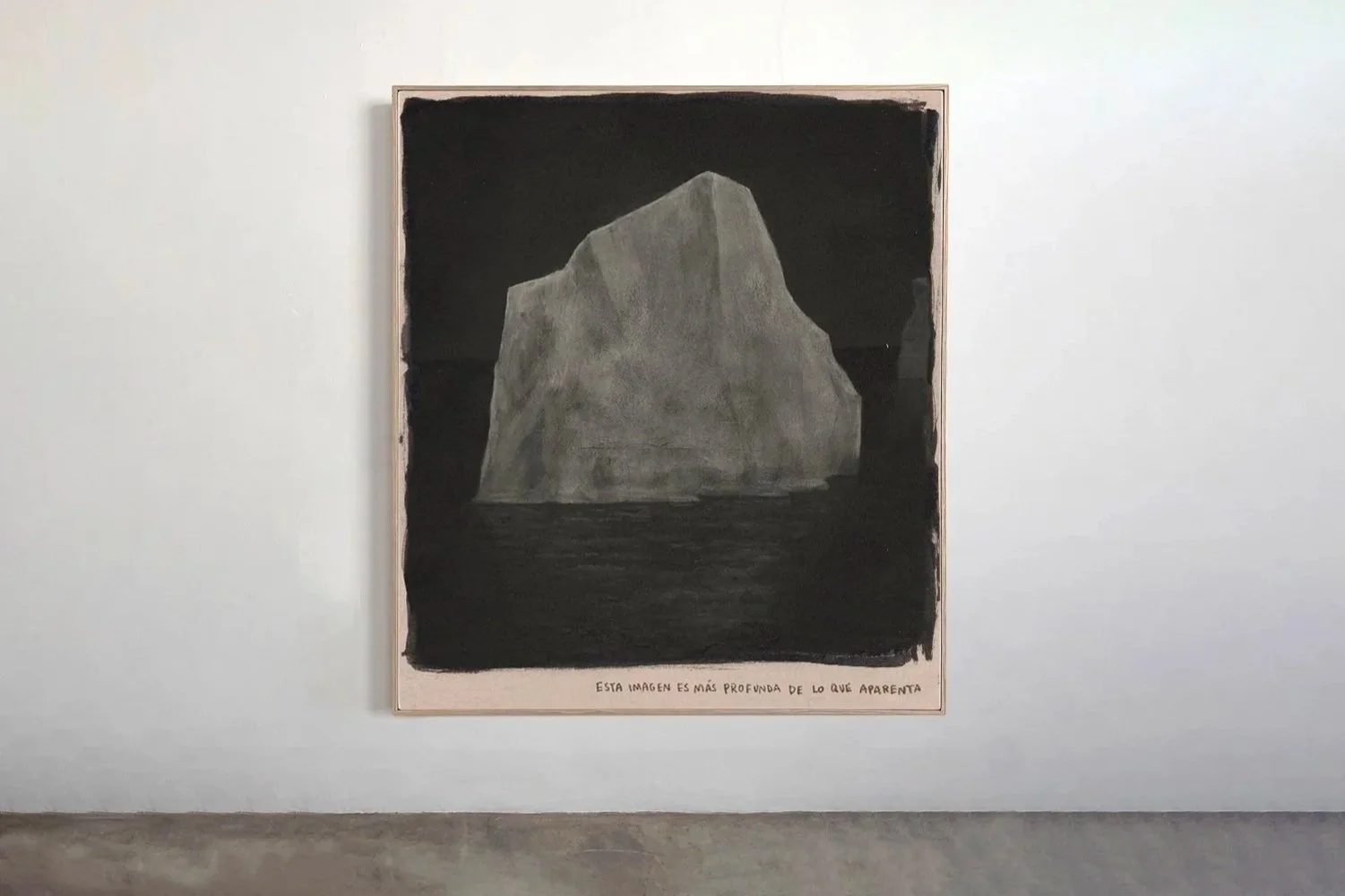
Esta imagen es más profunda de lo que aparenta
La serie de icebergs se presenta como un ejercicio de contención visual: formas monumentales suspendidas en un campo oscuro, casi neutro, que parecen ofrecerse como paisajes silenciosos, estables, incluso confiables. Nada más engañoso. El iceberg, por definición, es una trampa óptica: lo que se muestra es apenas una fracción mínima de una masa mucho mayor, invisible, sumergida y perfectamente indiferente a nuestra necesidad de comprenderla.
Estas piezas no intentan revelar lo oculto, sino subrayar el fracaso de ese impulso. La imagen se declara profunda —lo dice explícitamente— pero no se molesta en demostrarlo. La frase funciona como advertencia y como burla: una promesa conceptual que el espectador está invitado a creer, cuestionar o simplemente aceptar por cansancio. En ese gesto se activa el juego central de la serie: la fe que depositamos en las imágenes, en los discursos que las rodean y en nuestra propia capacidad para “leerlas”.
El iceberg aparece aquí como una arquitectura improbable, casi escultórica, flotando en un espacio que no termina de ser mar ni noche. No hay épica, no hay catástrofe, no hay derretimiento visible. Solo una presencia inmóvil que parece observarnos con paciencia geológica. La pintura se vuelve entonces un escenario para la proyección: de ansiedad, de profundidad intelectual, de significado. Todo eso ocurre fuera del lienzo, en la cabeza del espectador.
Estas obras no critican la idea de profundidad; la administran con ironía. Proponen una imagen que parece exigir interpretación mientras se resiste a confirmarla. Al final, el iceberg no es una metáfora del inconsciente, ni del cambio climático, ni del peso simbólico de la historia —aunque podría serlo, si alguien lo necesita—. Es, más bien, un recordatorio elegante de que muchas veces lo profundo no está en la imagen, sino en el esfuerzo que hacemos por sostener esa idea.
Porque, al final, si esta imagen es más profunda de lo que aparenta, quizá sea solo porque seguimos insistiendo en mirarla así..
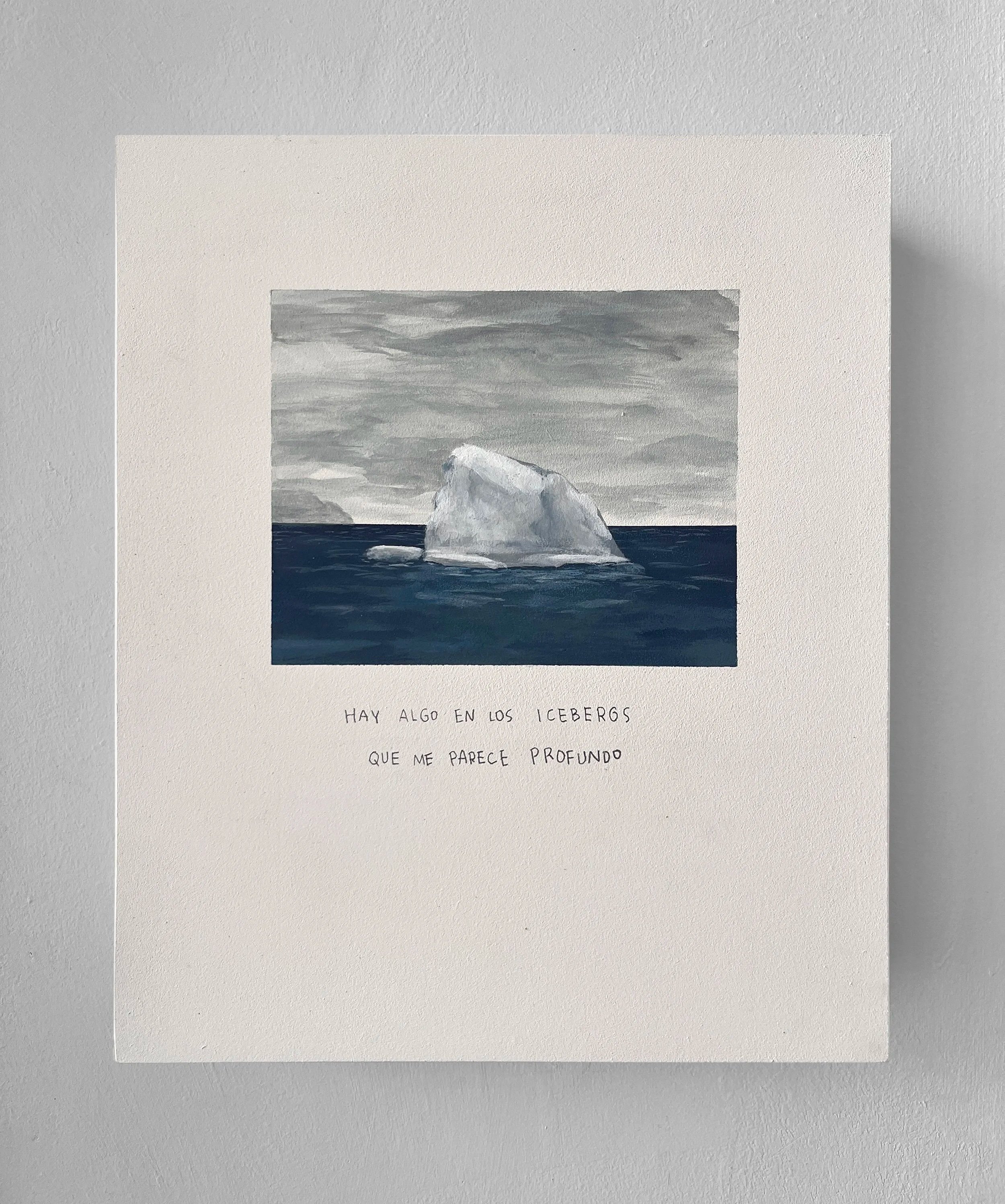
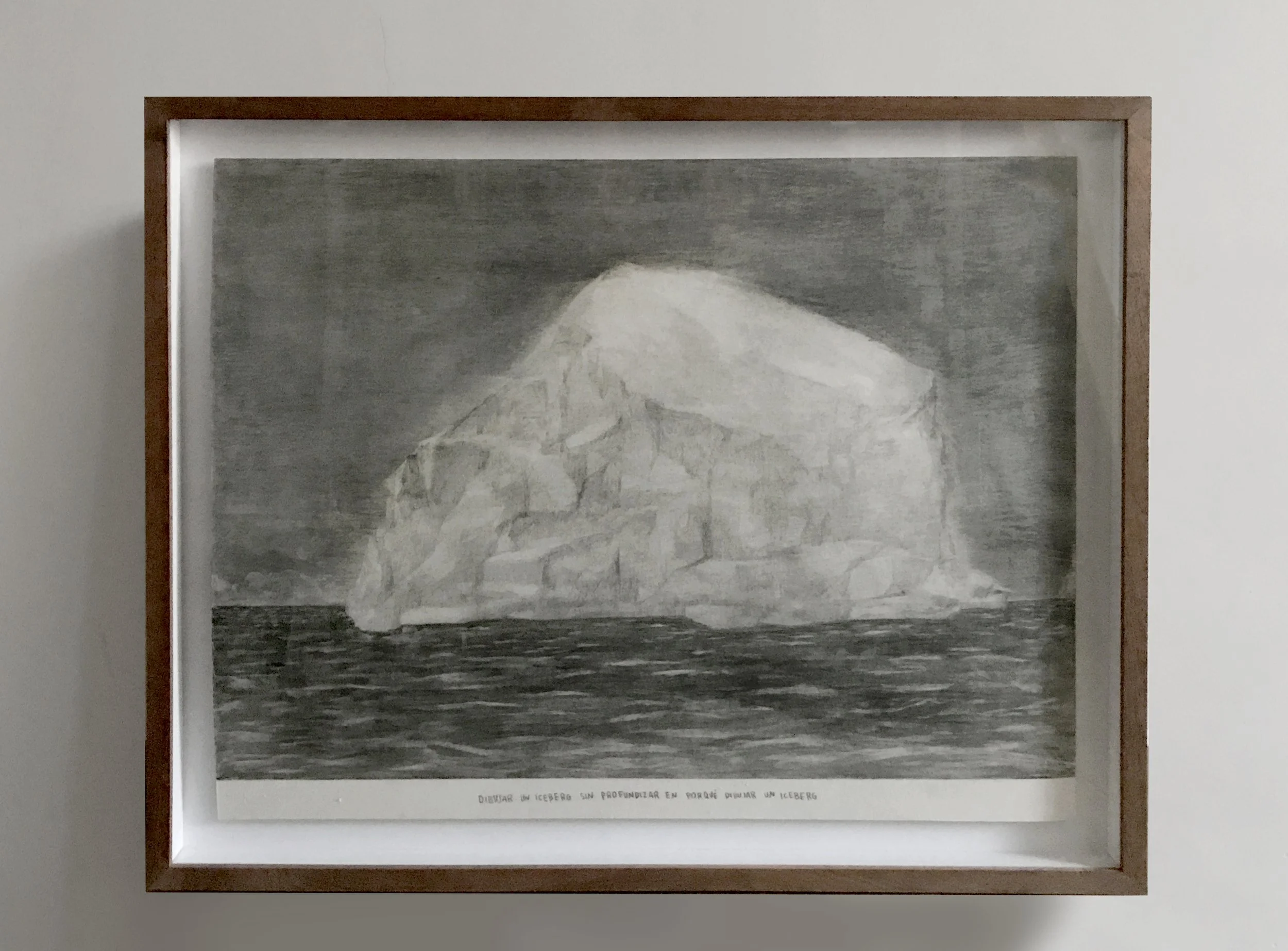
This Image Is Deeper Than It Appears
The iceberg series presents itself as an exercise in visual restraint: monumental forms suspended within a dark, almost neutral field, offered as silent, stable—almost trustworthy—landscapes. Nothing could be more misleading. By definition, the iceberg is an optical trap: what is visible is only a minimal fraction of a much larger mass, hidden beneath the surface and entirely indifferent to our need to understand it.
These works do not attempt to reveal what lies beneath; instead, they underline the failure of that impulse. The image declares itself to be deep—it says so explicitly—yet makes no effort to prove it. The phrase functions simultaneously as a warning and a provocation: a conceptual promise the viewer is invited to believe, question, or simply accept out of fatigue. In this gesture, the central game of the series is activated: the faith we place in images, in the discourses that surround them, and in our own capacity to “read” them.
Here, the iceberg appears as an improbable, almost sculptural architecture, floating in a space that never fully resolves into sea or night. There is no epic narrative, no catastrophe, no visible melting. Only an immobile presence that seems to observe us with geological patience. Painting becomes a stage for projection—for anxiety, for intellectual depth, for meaning itself. All of this takes place outside the canvas, in the viewer’s mind.
These works do not critique the idea of depth; they manage it with irony. They propose an image that seems to demand interpretation while resisting its confirmation. In the end, the iceberg is not a metaphor for the unconscious, nor for climate change, nor for the symbolic weight of history—although it could be, if someone needs it to be. It is, rather, an elegant reminder that depth often resides not in the image, but in the effort we make to maintain the belief that it is there.
Because, ultimately, if this image is deeper than it appears, it may simply be because we keep insisting on seeing it that way.